Here, Daniel, a Travel Aid volunteer, explains how the summer activity programme was done, from the first steps of planning and advertising through to working with the children...
During our month long stint at JWOC, the foremost task of the TravelAid team was to conduct a three-week summer activity camp for children in the surrounding community. While some of these children have been attending free English classes at JWOC for the past few years and were already expecting some summer activities to be held during this time, there were still many who have not had the time or opportunity to attend these classes and would not have heard of JWOC. Thus, in the week before the summer activity camp, we not only had to plan and prepare for the activities for each day, we also had to go out to the nearby villages to advertise our summer programme.
Our advertising efforts turned out to be an unexpectedly interesting and enjoyable experience. Our primary means of advertisement were through posters and flyers that we distributed in the neighbourhoods as well as word-of-mouth: if our activities are creative and novel enough, more children will turn up as days go by! The Khmer high school interns that were partnered with us were most helpful as they translated our requests to shopkeepers and villagers to put up posters in convenience shops and village common areas. As we walked down the main road, we also stopped children on their ways to and from home and promoted our summer programme to them. Coming from countries where people are pretty wary of strangers and whatever they intend to 'sell', our hearts were warmed as we saw how readily the locals welcomed our uninvited visits.
Visiting a squatter village during our rounds of advertising offered us a peek into the lives of some of the poorest people in Cambodia. These villagers don't own the land their houses are built on; many of them just don't own enough to do so. It is among these people that JWOC works: through lending small loans to people who would otherwise have no access to credit, through installing wells and providing simple hygiene training, and most relevant to us, through the provision of free classes for children whose families cannot afford to send them to school. Many of these children we visited in the squatter village were very enthusiastic about what we were offering them - a chance to have a few weeks of fun, games and activities while picking up some simple English at the same time. The summer camp also attracts children to attend proper English classes at JWOC, thus setting the stage for a longer term impact on the community.
While we planned for the summer programme, we consulted our Khmer partners about the appropriateness of the activities. Although we were targeting children between the ages of 7 to 13, we had to keep in mind that most of them had, at best, elementary English comprehension skills, and so in explaining games to them, we had to ensure that the rules were simple. The advice of our Khmer partners was invaluable: in one instance, they vetoed a game because it would have been too difficult, and even dangerous if not explained properly, for the young children to play. More importantly, we had to have good rapport with our partners in order to communicate our ideas to them and make sure that they were on the same page as us. And so after a week of intense brainstorming and planning, we were ready with a schedule packed with handicraft, painting, sports, games, song and dance, and reading sessions.
As we carried out the programme over the following three weeks, we found that although not all of the activities were exciting or entertaining, the children were grateful to have the opportunity to draw and play and spending time meaningfully together. Many of them came day after day after day, some even arriving an hour before the official start of the day, hoping to have someone spend time reading or playing with them. In all, it was a exhausting but pretty successful summer, hopefully we have enriched the lives of these children in one way or another!
Sunday, August 21, 2011
Anna explains the importance of scholarships
For her blog post Anna, a Travel Aid volunteer, talks about the new friends she has made and the realisation that her fundraising will make a big difference...
It is a requirement of all Travel Aid volunteers to make a donation of around £500 per person to their charity of choice. So, many months before touching down on Cambodian soil and facing the realities of an education system in need, we began the arduous and often challenging task of fundraising. Back then, our combined target of £4,500 was just a number at the end of a very long road. Each team racked their brains for ways to win over the hearts- and pockets- of our notoriously tight fellow students, and over the months which followed we have painstakingly watched our JustGiving totalisers inch upwards to meet our goal. So, cakes were baked, Krispy Kremes and Pimms were sold, cars were washed, and we discovered that some people will pay anything for a glowstick in the pub on a Friday night. The donations started rolling in, and thanks to the generosity of our families, friends and local organisations we were able to step on the plane content in the knowledge that our first goal had been met.
The summer activities team- Travel Aid volunteers and JWOC High School Interns.
One thing that I don’t think any of us had really considered though was the impact our donation could make. The children and young people at JWOC go there because they need the services it provides. Many of them are from very low income families who cannot even afford the small costs of state schooling, so the free classes and wide range of facilities open doors of opportunity they could not otherwise imagine. Over the course of our time at JWOC, we have got to know a fraction of the students who benefit from the school’s resources- perhaps best of all, our Khmer partners; high school students who have just completed their final exams. In September our nine new friends will be told whether or not they have been awarded one of the 17 university scholarships the school offers. My partner, Raksa dreams of studying medicine at university, but despite her family’s recent begrudging approval for her to continue her studies, she simply does not have the money to support herself through university. She feels that the internship has given her the confidence to apply for the scholarship, something with which Reak Smey, another of the interns, agrees; “the internship has given me a chance to practice my English- English skills are one of the most important factors in getting the scholarships.” But despite this apparent ‘leg up’ in the JWOC family, neither Raksa nor Reak Smey can guarantee that they will be some of the lucky few to receive a scholarship. Already, the school has given out over 200 application forms and with the closing date over a month away, they are expecting hundreds more.
Anna and Raksa enjoy a dinner out in Siem Reap.
Competition for places is only one hurdle in their paths to a more prosperous future. Currently, the corrupt and ruthless education system relies largely on bribery and wealth, and as a result, Reak Smey notes, ‘the rich will stay rich and the poor will stay poor’. The JWOC scholarships offer students a lifeline out of a poverty trap, giving them the chance to improve the lives of their families and build a fairer society around them.
Dancing and singing has been a big part of the summer activities!
Working so closely together with our Khmer partners- building friendships alongside the summer camp project- has left us in no doubt as to where we want our donation to end up. For the lucky few who will receive a JWOC scholarship, their fees for the duration of their time at university, a mere $2000, will be provided for. Not only that, but the experiences they gain from their voluntary hours at the school- whether it be educating villagers in health care, working tightly with the microfinance project or taking on teaching roles in the classroom or the IT lab- will be invaluable to their CVs, and strengthen the relationship between the community and the education system. Cambodia is a growing country, and if our donation can give a few more students like Raksa, Reak Smey and the other high school interns the chance at a brighter future, we’ll know that the summer of 2011 will have been one well spent.
It is a requirement of all Travel Aid volunteers to make a donation of around £500 per person to their charity of choice. So, many months before touching down on Cambodian soil and facing the realities of an education system in need, we began the arduous and often challenging task of fundraising. Back then, our combined target of £4,500 was just a number at the end of a very long road. Each team racked their brains for ways to win over the hearts- and pockets- of our notoriously tight fellow students, and over the months which followed we have painstakingly watched our JustGiving totalisers inch upwards to meet our goal. So, cakes were baked, Krispy Kremes and Pimms were sold, cars were washed, and we discovered that some people will pay anything for a glowstick in the pub on a Friday night. The donations started rolling in, and thanks to the generosity of our families, friends and local organisations we were able to step on the plane content in the knowledge that our first goal had been met.
One thing that I don’t think any of us had really considered though was the impact our donation could make. The children and young people at JWOC go there because they need the services it provides. Many of them are from very low income families who cannot even afford the small costs of state schooling, so the free classes and wide range of facilities open doors of opportunity they could not otherwise imagine. Over the course of our time at JWOC, we have got to know a fraction of the students who benefit from the school’s resources- perhaps best of all, our Khmer partners; high school students who have just completed their final exams. In September our nine new friends will be told whether or not they have been awarded one of the 17 university scholarships the school offers. My partner, Raksa dreams of studying medicine at university, but despite her family’s recent begrudging approval for her to continue her studies, she simply does not have the money to support herself through university. She feels that the internship has given her the confidence to apply for the scholarship, something with which Reak Smey, another of the interns, agrees; “the internship has given me a chance to practice my English- English skills are one of the most important factors in getting the scholarships.” But despite this apparent ‘leg up’ in the JWOC family, neither Raksa nor Reak Smey can guarantee that they will be some of the lucky few to receive a scholarship. Already, the school has given out over 200 application forms and with the closing date over a month away, they are expecting hundreds more.
Competition for places is only one hurdle in their paths to a more prosperous future. Currently, the corrupt and ruthless education system relies largely on bribery and wealth, and as a result, Reak Smey notes, ‘the rich will stay rich and the poor will stay poor’. The JWOC scholarships offer students a lifeline out of a poverty trap, giving them the chance to improve the lives of their families and build a fairer society around them.
Working so closely together with our Khmer partners- building friendships alongside the summer camp project- has left us in no doubt as to where we want our donation to end up. For the lucky few who will receive a JWOC scholarship, their fees for the duration of their time at university, a mere $2000, will be provided for. Not only that, but the experiences they gain from their voluntary hours at the school- whether it be educating villagers in health care, working tightly with the microfinance project or taking on teaching roles in the classroom or the IT lab- will be invaluable to their CVs, and strengthen the relationship between the community and the education system. Cambodia is a growing country, and if our donation can give a few more students like Raksa, Reak Smey and the other high school interns the chance at a brighter future, we’ll know that the summer of 2011 will have been one well spent.
Clean Water and Hygiene at JWOC- Rob's experience
In this post Travel Aid volunteer Rob talks about what he learnt and observed while joining JWOC's Clean Water and Free Classes teams.
Muddy, sandy, slippery: picking our way for several kilometres along a sodden track leading to the village felt like an appropriate introduction to JWOC’s work in the village communities as, on the first Saturday of our time as volunteers in Siem Reap, we were lucky enough to watch the clean water team go about their work surveying the village’s residents.
The householders were very hospitable, offering us seats - or, on one occasion, a hammock! - and sometimes fruit while the project workers asked questions such as each house’s water source in different seasons, protection against mosquitoes, and recent illnesses. We then saw the basic wells which a lot of the houses seemed to use: these produced decidedly mixed results, so the next step will be for the clean water team to return and install new, reliable wells for use in all seasons and then gauge their effectiveness over time.
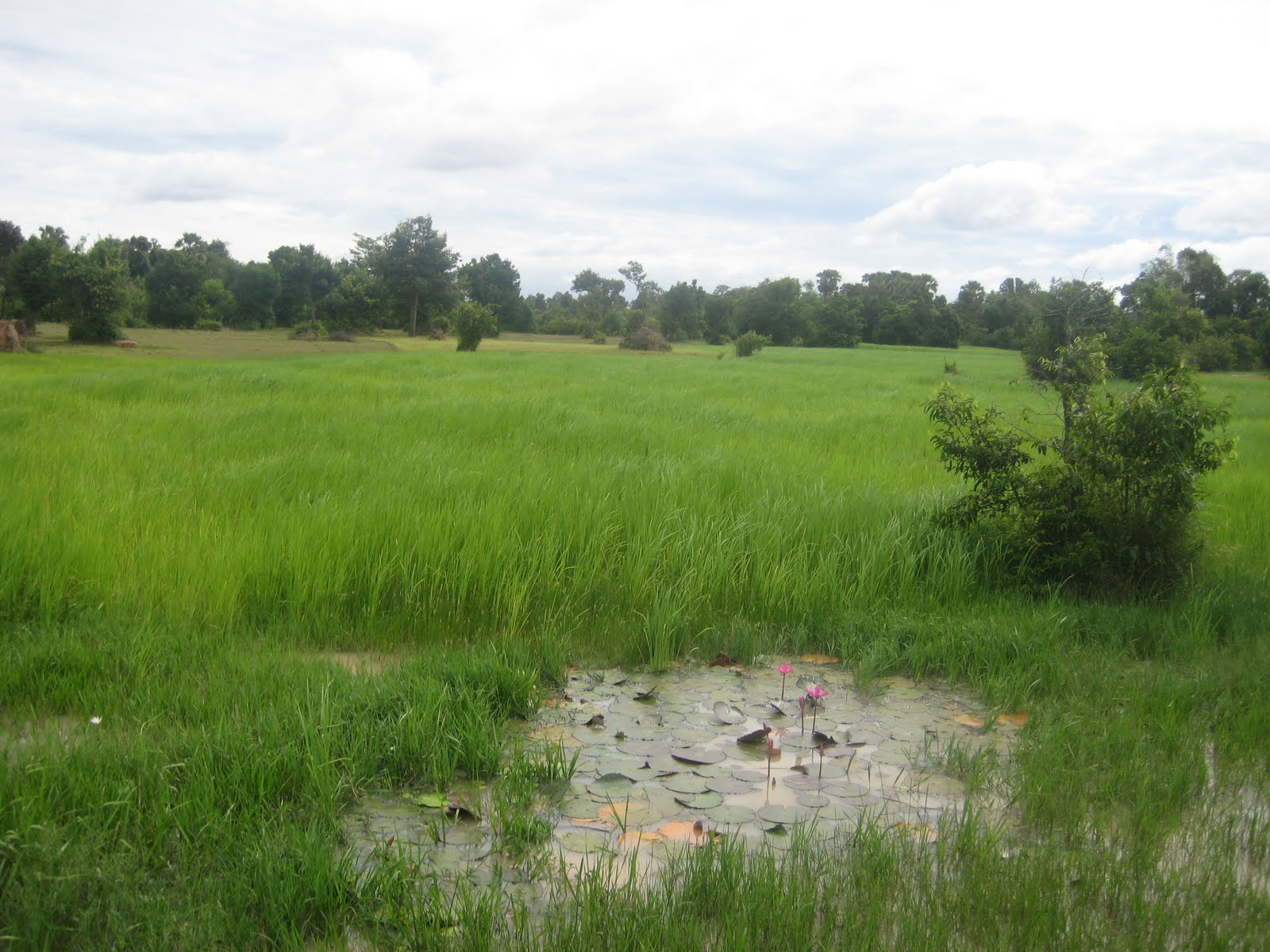
The sight of the brown, murky water of the rice paddies, which we were told were used by the children for swimming, was a clear reminder of what the project was all about; all the more so, since a project worker explained to me that, while instances of serious waterborne disease amongst adults are comparatively few, children are far more prone. That’s precisely where another JWOC project, the hygiene program, comes in: to build on the ground-work of the clean water scheme and begin to educate children at an early age about the sorts of hygiene basics which, although apparently simple, can make a great difference.
It was refreshing to see both the enthusiasm of the children – whatever their ages – in following the mimes of hand-washing during the original demonstration, and then their eagerness to put these principles into practice in between games and activities, scrupulously subjecting their palms and fingernails to sprays of soapy water.
Hygiene training also complemented the broader drive of teaching English to the children, since the training consisted not only of a single demonstration, but also of approaches to it from different angles – with the key words on flashcards, alongside the action itself. Staff also tended to sneak back to the theme at different times, such as before art class on a Sunday afternoon, when the children were reminded of the steps and then went about following them with characteristic gusto. As well as concentrating on younger children, JWOC also aims to introduce older students to the fundamentals of the Hygiene program by introducing ideas such as hand-washing and teeth-cleaning into early-stage English classes, and hygiene training also comprises a follow-up stage in the clean water project.
These sorts of hygiene basics seem simple to us precisely because they have been drummed into us from an early age, and hopefully by the same principle initiatives like these can make a real difference to the health of those living in and around Siem Reap.
Helen's experience in writing class at JWOC
One of the most heartening aspects of teaching at JWOC has been the
incurable eagerness and enthusiasm of the students. Many of them walk,
cycle, or even push their way in wheelchairs to the JWOC English
classes from their homes which can be 20kms away, and yet still
always arrive with beaming smiles and confident “hello’s”.
As TravelAid volunteers, our first job in the English conversation
classes was simply to sit amidst the students and help them with their
exercises and comprehension throughout the lesson, and to chat with
them before and after class (several would stay after class until we
ourselves had to go, which was hugely different to students at home
who would shoot out the room the minute the bell rang). Most of them
have busy days without JWOC anyway; many of them work, whilst others
must take care of their younger siblings or help with household
chores, and the fact that they still make the time and effort to come
to JWOC is an inspiration to me, and something which I wish I could
say of the teenagers back home.
It was mainly because of this experience that we decided to set up
our own free classes: the students simply yearned to learn and were
meticulous in their improvement, making sure they picked out every
detail they hadn’t understood and patiently waiting for us to find the
simplest explanation we could, and knowing what a struggle basic Khmer
was for us to learn, it’s hard to conceive how they kept themselves so
driven!
We arranged for these classes to take place during the hour before
their Conversation Class, so they wouldn’t have to trek half way
across the country to and from school more than once a day. Because
there was such a wide spectrum of English skills within the group (and
almost all of us wanted to teach anyway), we had three volunteers in
each class – one at the board and two sitting among the students to
help any who were struggling. We organized the topics and the
activities before each class, loosely based around what we had
observed in our sit-in lessons.
Standing in front of a semi-circle of expectant students, all
desperate to learn your language, and completely reliant on every word
you say wasn’t exactly the idealistic image I’d pictured of breezing
from one exercise to the next effortlessly, as I now realize my
schoolteachers seemed to be able to do to perfection. Twenty pairs of
big brown eyes gazed up at us, and the pens in their hands seemed
disconcertingly ready to transmit my every word into the awaiting
notebooks. Suddenly instructions on my print-out of the lesson plan
like, “Explain the reasons why various past tenses are used in
different situations” left me utterly clueless, and any grasp of the
English language I might have had made a hasty retreat into the most
remote rabbit-holes of my brain. Fortunately, we found them to be incredibly patient with us - as unqualified teachers we often struggled not only to understand the complications of the English language ourselves, but also to explain
them, yet they encouraged us nevertheless with their own suggestions
and ideas, and kindly smiled though our endless ‘err’s and ‘umm’s.
Talking to them individually, it is clear that for the most part they
don’t view English as a chore to drag their feet through, but rather
as an opportunity to share the intricacies of their lives with us, and
to attempt to understand the rather perplexing facets of our foreign
culture which they simply couldn’t get their heads around – despite
countless drawings and translations, we were never able to make
everyday features such as custard, toasters and pastry be met with
anything more than a sea of raised eyebrows.
Thursday, August 04, 2011
Five more sponsors needed!
You may remember I wrote a while ago asking you to consider becoming a sponsor of one of our 24 new scholarship students. The great news is that many of you decided to help change a life this year and have become new sponsors.
However, we still need five more sponsors in order to support the 24 new students in their ambition to attend university and improve their prospects.
JWOC Scholarships change lives. And you can be a part of making that change.
To help you know the difference you are able to make, two JWOC graduates, Thoum and Keang ,have written below about their experience as a JWOC scholarship student and how it has helped them and others.
My name is Thoum Lorm. I come from a small village in the forest in Banteay Meanchey Province. JWOC changed my life and I had chance study at university. I did not believe that I could study at university but JWOC gave me the power to do so.
JWOC helped me to change my life, my family, and my community. I learnt as a JWOC scholarship student general knowledge and the specific skill of teaching English as a second language. During my scholarship I helped JWOC with teaching English in the JWOC school to improve my skill. This was great experience for me because my degree is in the field of Teaching English as a Second Language.
In conclusion, JWOC is a good organization in Siem Reap, Cambodia that helps a lot of people. I wish for JWOC to grow bigger and bigger and support more scholarship students.
My name is Ms. Heam Keang . I feel that I am very lucky of my life because I got JWOC’s scholarship student since am in the first year until graduate. I am very happy to telling all of you what I did in JWOC And also what the difference a JWOC scholarship made to me.
I got scholarship in 2007 and I took Banking and Finance as my subject. During I am scholarship student I got great knowledge from JWOC day by day. As Micro-Finance’s volunteer every Sunday I was going to visit villager and collect the money and in Clean Water Project we are going on every Saturday morning to villages along the road of north Baray. When we are arrive some villager are waiting us. People are happy to get knowledge what JWOC provide, and we are completed villages one by one and improve to village to other village. This is a really good experience for me and especially I was teach to my mom and neighbor how to install, use and taking care of water filter that I got from JWOC. How we do without leaning?
I graduated on August 31, 2010, and the job I have now I think it’s nearly my goal job. I wish JWOC get more sponsor, so can have more teaching project, water project and micro finance and help more students
Sponsoring a student and changing their life costs $500 per year of their degree. This covers all their fees and books, plus all the additional life skills training offered by JWOC.
If you would like to find out more about the Scholarship Programme please visit this page on our website or reply to this email with any questions. We also have a FAQs page to answer some the most common questions.
If you have decided to help JWOC change lives you can make your donation via our donate now page. You can donate online or by check, marking your donation ‘scholarship’. We ask you make a 4 year commitment to your student. If you are able to send sponsorship for the full four years that is wonderful, but don’t worry if not, you can donate for each year individually. Please make your donation before 31st August to make sure we can match you with a student for this coming academic year.
I look forward to welcoming you as a new sponsor and introducing you to your student in September!
Very best wishes,
Nicola
JWOC Managing Director
Subscribe to:
Posts (Atom)